
Scottsdale Directory Collections Compared
The Scottsdale Heritage Connection at Civic Center Library is the chief local shelf. Its confirmed holdings include Scottsdale residential and business directories, selected school yearbooks, local newspapers, microfilm, microfiche, maps, books, and neighborhood files. The official collection page does not publish a year-by-year city directory inventory or identify every publisher. That gap matters. A catalog search or librarian reply should establish the title, edition, and publisher before any exact coverage claim is made.
| Historical source | Known span | Where kept | Way to consult it |
|---|---|---|---|
| Scottsdale residential and business directories | Exact runs not published online | Heritage Connection | Catalog check and in-building use; appointment for some items |
| Scottsdale Progress | 1948-1977 | Scottsdale Public Library | Digital access through the library collection |
| Digital History Collection | Broad, growing Scottsdale history | Library digital catalog | More than 40,000 images and videos online |
| Selected Scottsdale yearbooks | Years vary by school | Heritage Connection and selected digital access | Catalog or materials request |
| Census and directory databases | Collection-dependent | Scottsdale Public Library branches | Ancestry Library in house; HeritageQuest under library access rules |
Phoenix metropolitan volumes can also include Scottsdale residents. They are not the same as a dedicated Scottsdale title. The collection policy keeps another city's directory when it contains Scottsdale information, so both dedicated local titles and broader metropolitan catalogs deserve a search. No official last printed Scottsdale city directory year was found, and no publisher run should be inferred from a national brand name.
Scottsdale Directory Research In Person
Heritage Connection occupies more than 2,000 square feet inside Civic Center Library and is open during library hours. Most historical material is for use inside the building. Some rare books, files, and archival items require an Ask-a-Librarian appointment. Food and drink are not allowed in the rare-material space. Those rules protect items that may be the only local copy.
The most efficient request gives staff a person or address, an estimated decade, and the type of clue sought. Ask for the catalog record and call number of each directory, then ask whether the volume has both an alphabetical section and a reverse street section. Staff can also point to microform newspapers or a yearbook when the city directory run has a missing edition. The Heritage Connection materials request is the documented route for items that need advance handling.
The Heritage Connection request page was refreshed during the library's 2026 web transition. The access model still distinguishes open digital material from in-building and appointment material. Record the edition and shelf source in notes, since a later researcher must be able to find the same Scottsdale directory again.
The library's request page shows how historical materials are called for use.
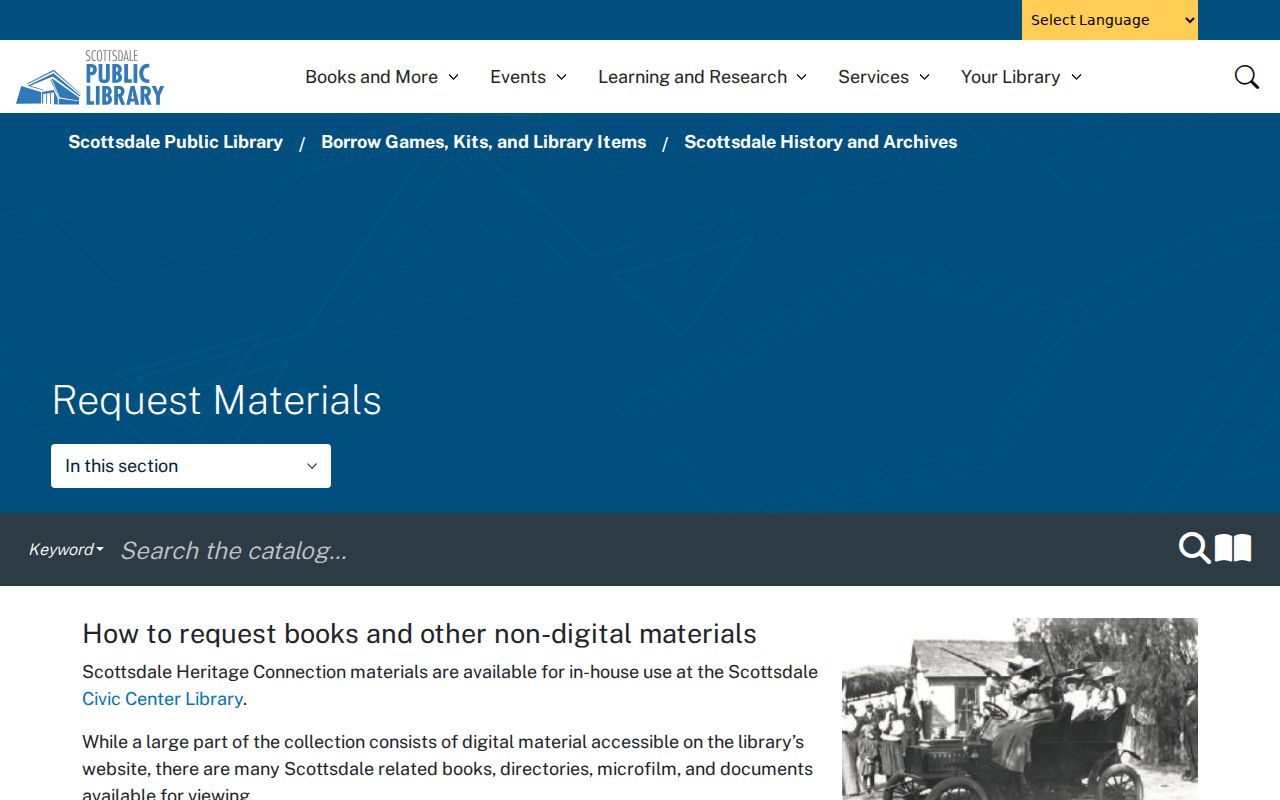
The captured page reinforces that a rare directory may need a request even when other local history items are available during normal library hours.
Note: Confirm the library's current hours and appointment details before travel, because collection access can change independently of catalog coverage.
Read Scottsdale City Directory Entries
A city directory entry should be transcribed as printed before it is interpreted. The official Scottsdale collection page does not expose a scanned entry for inspection, so the precise marks in any volume remain a research question until that edition is opened. A mid-century metropolitan volume may show the fields below, but the abbreviation key in the actual book controls their meaning.
| Personal name | Surname, given name, initials, and sometimes a spouse in parentheses |
|---|---|
| Trade or role | An occupation label, business affiliation, or civic role when the edition records it |
| Residence line | House number, street, and sometimes a phone listing |
| Status mark | A possible homeowner, widow, moved, or deceased notation whose key must be checked |
| Cross-reference | A direction to another name, business listing, or street-order entry |
Photograph or copy the title page and abbreviation key with the entry. Never import a symbol's meaning from another publisher or year. Women, boarders, rural households, recently annexed residents, and people who declined a listing can be absent. A missing name is a prompt to check another source, not proof that the person was gone.
- Criss-cross directory
- A section arranged by street and house number rather than by surname. Not every edition is confirmed to have one.
- Householder index
- An address-led list that may identify the named person associated with a dwelling at publication time.
- Abbreviation key
- The volume's own legend for shortened terms and symbols. It should be read before decoding an entry.
- Snapshot
- A listing tied to one edition, not proof of continuous residence before or after publication.
Reverse a Scottsdale Directory Address
When a known old address is the starting point, a reverse or criss-cross section can turn the house number into a listed occupant or telephone. Search the street name first, then move in number order. Copy nearby entries only as context, and do not assume they represent a full household. If the requested edition lacks a reverse section, use its alphabetical entries after a name is found in a newspaper, census, deed, yearbook, or probate file.
Address continuity is a special Scottsdale concern. The city incorporated in 1951, while the Maricopa County land record reaches back to 1871. Early or fringe properties may appear under county geography or a Phoenix-area volume. Postal Scottsdale can also extend beyond city jurisdiction. APN, subdivision, lot, plat, and MCR references are stronger bridges than street wording when annexation or postal use clouds the place name. Modern address research belongs in the Scottsdale street directory, while old printed volumes keep the historical address angle here.
Note: No official comprehensive Scottsdale street-renumbering table was found, so do not assign a change year without a plat, map, or city record.
Scottsdale Directory Meets Progress News
The digitized Scottsdale Progress run from 1948 through 1977 overlaps the community's postwar expansion and its 1951 incorporation. It can explain why a person appears, moves, or disappears between directory editions. Obituaries, school news, club lists, advertisements, civic items, and address changes can connect a short printed entry to a fuller event. Search a surname, then add a street, school, organization, or business term to narrow common names.
Newspaper text is evidence, not a substitute for the city directory image. Record the date, page, and spelling used. An advertisement may link a person to a shop, while a club item may place the same name in a civic network. Neither fact alone proves a home address. The directory line, article, and land or probate record become much stronger when their dates and middle initials agree.
The incorporation date also changes where to look. Pre-1951 Scottsdale residents are more likely to surface across county land, court, tax, census, and Phoenix-area sources than in a city-created system. The Progress archive bridges the shift without pretending that municipal records began as a complete population list.
Scottsdale Directory Clues Go Digital
Scottsdale Public Library's Digital History Collection contains more than 40,000 images and videos. Its scope reaches people, buildings, neighborhood newsletters, student newspapers, selected yearbooks, city cable, and local events. A directory name can therefore lead to a face, school activity, storefront, neighborhood group, or public occasion. Search variants matter: use a full name, initials, surname, street, school, and organization in separate passes.
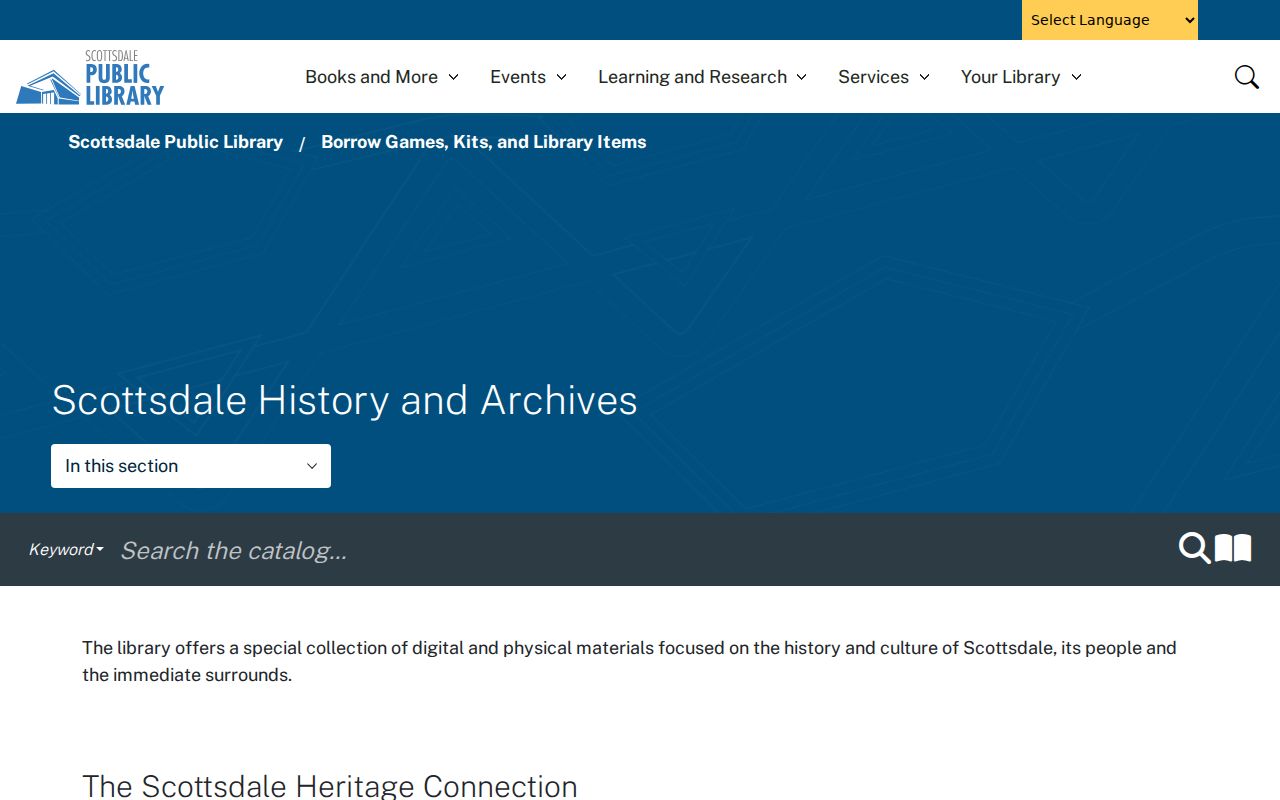
The image points researchers toward the local institution that joins printed directory shelves with searchable digital history.
Arizona Archives Extend Scottsdale Directories
Statewide sources widen the circle. The Arizona State Archives genealogy collection organizes many holdings by the office that created them, and the Arizona Biographical Database points to books, articles, obituaries, and vertical files. Arizona Memory Project can surface institutional photographs and maps. A citation or image should still be checked against the holding institution's description and access terms.
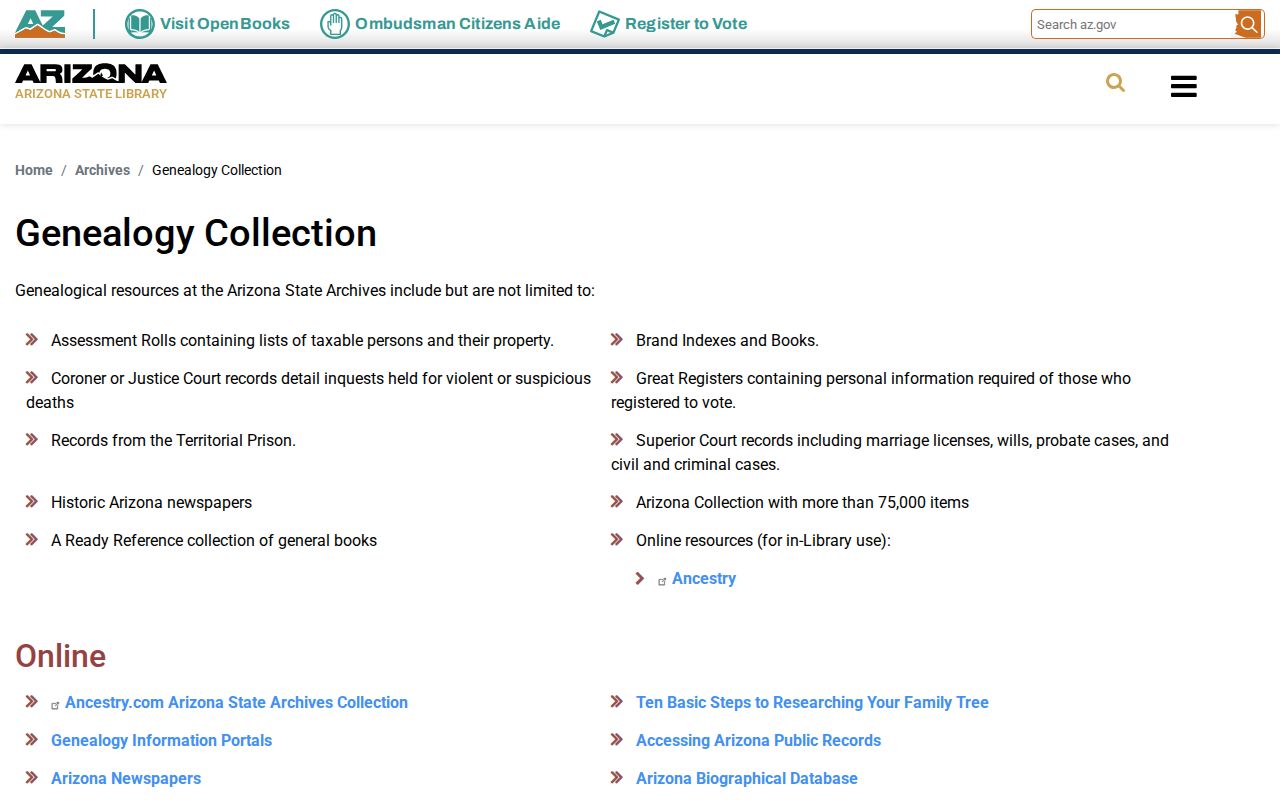
The archives screen reinforces a key search tactic: look under the creating court or county record group as well as under the Scottsdale resident's name.
Scottsdale Directories Reconnect Classmates
A lawful classmate search is one strong human use for Scottsdale's historical collections. Begin with a Heritage Connection yearbook to establish the school, spelling, and class period. Check Progress school news for activities or later announcements. Then consult a city directory near the same year, remembering that a student may appear only through a parent or householder listing. A marriage notice, obituary, probate item, or public historical certificate can help explain a later surname or family link.
This method keeps each claim tied to its source. A yearbook identifies school context. A directory gives a dated household clue. A news item adds an event. Arizona public certificate images become available only after the statutory waiting periods, with births opening after 75 years and deaths after 50. Current certificates remain controlled records.
Respect matters. Historical identification does not grant permission to publish a private address or press unwanted contact. Membership rolls and association directories stay private unless their organization makes them public. Use public historical records for personal reconnection and family research without turning a dated listing into a claim about where someone lives now.
Trace Scottsdale City Directory Households
A city directory trail becomes reliable through repetition and cross-checks. Pick one known date and one firm clue. Move edition by edition, preserving exact spellings, marks, addresses, and citations. Census records through 1950 are now public under the federal 72-year rule, which makes the 1950 census a useful partner for Scottsdale's postwar directory and newspaper evidence.
- Locate the person in the alphabetical section of a known edition, and capture the title page plus abbreviation key.
- Check any street-order section for the same address and note nearby listings only as context.
- Inspect the prior and next available editions to bracket the first and last appearance rather than assuming annual residence.
- Compare the address and household with the 1950 or an earlier released census, then test names against deeds or probate records.
- Close gaps with Scottsdale Progress, yearbooks, obituaries, maps, and the library's archival files.
A disappearance has several possible meanings: a move, death, omission, boundary change, unlisted status, or a missing volume. Each is tested in a different source. For modern verification after a historical find, shift to the Scottsdale resident lookup and keep the old and current evidence in separate date columns.